LDD-08 · Lighting Framework
One-line intent
Light the space, not the fixture.Locked decisions
Core rules
- No visible light sources
- No cans (recessed downlights)
- No track lighting
Layered system
| Layer | Purpose |
|---|---|
| Ambient (indirect) | Background fill, ceiling + wall wash |
| Wall apertures (A/B/C) | Architectural perforations admitting light from concealed source |
| Task lighting | Counter, work surface, reading |
| Human-scale (lamps) | Comfortable, low-mounted personal light |
| Low-level navigation | Stair, hallway, floor-grazing at night |
Electrical + control
- 24V low-voltage throughout
- Drivers accessible, never buried
- Scene-based control only · all dimmable
- Scenes: Day · Evening · Social · Night · Cleaning · Gym
Open items / engineer review
- Specific fixture selection per layer
- Driver count + locations (designed into framing)
- Control system: Lutron RA3 / Crestron / Loxone / KNX / DALI
- 2700K vs 3000K default — pick one
- CRI target (90+ living, 95+ kitchen, 80+ utility)
- Color tunability (warm-dim) — adds 20–40%
Cost drivers
$8–14/sqft conditioned area = $58–100K total. Linear LED runs $25–60K · Drivers $5–10K · Control hardware $8–16K + commissioning $4–8K · Task/accent/lamps $6–14K. Budget: $70K.Air-gap concerns
- "No cans" is correct + costly. Sticker shock vs mainstream residential.
- 24V voltage drop on long runs is real; driver placement strategy matters.
- Scene commissioning is 2–3 visits — first scene set is never right.
- No emergency / egress lighting mentioned. Code-required on stairs.
- No circadian / tunable-white spec — bake in now if desired.
- Mockup the central island light panel + capture field — most visually critical fixture.
- Driver heat dissipation in sealed pockets — vent or drivers fail early.
Cross-references
← Inputs from
LDD-06 diffusers must defer to lightingDiagram
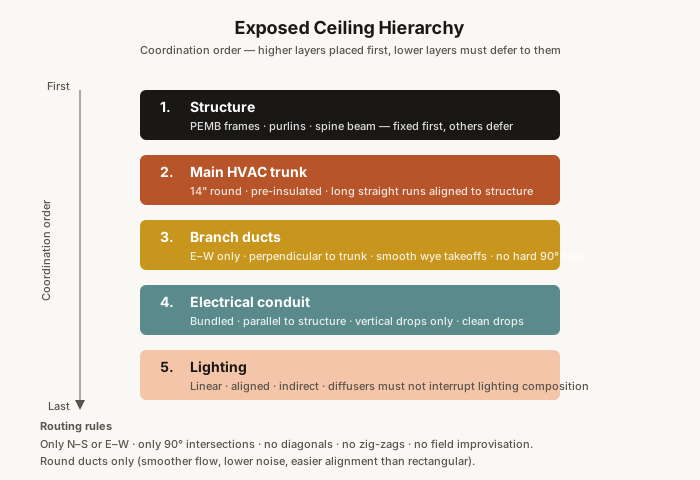
Lighting is layer 5 — last placed, must defer to all higher layers.